TrafficAuth is powered by OmniTrust (formerly INTEGRITY Security Services)
TrafficAuth-SCMS gives DOTs and approved fleet operators a trusted, U.S.-hosted foundation for secure V2X communication — enabling authenticated devices, standards-based certificates, advanced permissions, and interoperable message security for both Direct V2X and Network V2X deployments.
TrafficAuth-SCMS is a hosted Security Credential Management System designed for DOTs, public agencies, and approved fleet operators deploying secure V2X systems.
It provides the digital certificates and trust services needed for connected vehicles, roadside units, onboard units, infrastructure systems, sensors, and smart city applications to exchange authenticated V2X messages.
For DOT operators, TrafficAuth-SCMS supports the move from isolated connected vehicle pilots to large-scale, trusted transportation networks — where every participating device can be verified, every message can be signed, and every permission can be controlled.
TrafficAuth-SCMS supports both Direct V2X and Network V2X, helping agencies secure messages whether they are exchanged locally over the 5.9 GHz safety band or routed through cloud-based V2X services such as the National Mobility Interchange.


End-to-End Security for Connected Transportation
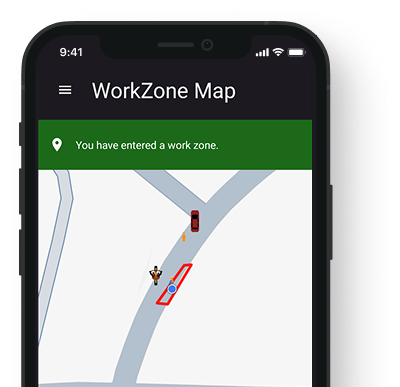
V2X systems rely on rapid, trusted message exchange. A vehicle may request signal priority. A roadside unit may broadcast SPaT and MAP data. A smart intersection may distribute Sensor Data Sharing Messages. A DOT-operated work zone may publish temporary safety alerts. A fleet vehicle may receive warnings about vulnerable road users in a crosswalk.
In each case, receiving systems must know that the message came from an authorized source and has not been altered.
TrafficAuth-SCMS provides the certificate-based trust layer that enables that verification.
Using IEEE 1609.2 message security, V2X devices can digitally sign messages so other systems can validate authenticity and integrity. NMI documentation similarly describes V2X payloads as SAE J2735 messages protected with IEEE 1609.2 security wrappers and digital signatures.
Developed, Maintained, Hosted, and Operated in the United States
TrafficAuth-SCMS is developed, maintained, hosted, and operated entirely in the United States. For many DOTs, this is a critical procurement and infrastructure consideration. V2X trust services support safety-critical roadway communication, including signal priority, preemption, connected intersection data, work-zone alerts, fleet operations, and infrastructure-to-vehicle safety messaging.
DOTs need confidence that the trust platform supporting these services is operated under a domestic framework.
The TrafficAuth family of solutions is the only SCMS platform currently available from a U.S. company that is entirely developed, maintained, hosted, and operated in the United States.
Based on the ISS SCMS
TrafficAuth-SCMS is based on the ISS SCMS, a proven SCMS platform with deep connected vehicle deployment history. ISS public materials describe the ISS SCMS as the “world’s first turnkey managed service in production” for securely generating and distributing V2X certificates to vehicle and roadside communication devices. (INTEGRITY Security Services)
TrafficAuth-SCMS builds on that foundation for DOT-focused deployments, providing a hosted service model for agencies that need secure, interoperable V2X credentials without building and operating their own SCMS infrastructure.
Approved Trust for North American V2X Interoperability
TrafficAuth-SCMS is listed on the SCMS Manager Certificate Trust List, or CTL.
The CTL provides the trust anchor framework that allows V2X devices and systems to recognize approved certificate authorities in the North American ecosystem. IEEE describes a CTL as the list of root CA certificates trusted by an SCMS Manager, where root CAs agree to follow and enforce that SCMS Manager’s certificate policies and practices. (IEEE Standards Association)
For DOTs, CTL listing is important because it supports interoperability across regions. A vehicle entering a DOT-operated area with valid certificates issued under another CTL-recognized trust chain can remain compatible, provided the device certificates are based on the SCMS Manager CTL and meet applicable policy requirements.
That means DOTs can deploy local V2X services without creating isolated islands of trust.
Safe Testing, Controlled Production
TrafficAuth-SCMS provides two parallel environments: pre-production and production.
Pre-Production Environment
The pre-production environment is available for testing, development, pilots, vendor integration, and experimental deployments.
DOTs and vendors can use pre-prod to validate device behavior, test message flows, evaluate integrations, and prepare systems before entering production.
Production Environment
The production environment is reserved for approved, compliant, safety-relevant deployments.
Production certificates are issued only to devices that have been reviewed and approved to comply with SCMS Manager End Entity requirements for device security. Infrastructure production certificates are issued only to legitimate, authorized DOTs and their approved direct vendors.
This separation helps protect the production V2X ecosystem while giving agencies and vendors a practical environment for testing and development.
IEEE 1609.2, IEEE 1609.2.1, and CAMP Support
TrafficAuth-SCMS is fully aligned with the standards required for interoperable V2X trust.
IEEE 1609.2
Provides the security framework for signing and verifying V2X messages.
IEEE 1609.2.1
Defines how devices interact with hosted SCMS systems for certificate enrollment, provisioning, and lifecycle management.
CAMP Interface Support
Maintains compatibility with legacy V2X systems that rely on the earlier CAMP interface.
For DOTs, this combination is important. Many deployments include both new equipment and older connected vehicle systems. TrafficAuth-SCMS supports modern standards while helping agencies preserve the value of previously deployed RSUs, OBUs, and vendor integrations.
Trust That Goes Beyond Identity
Modern V2X security is not only about proving that a device is real. It is also about controlling what that device is allowed to do.
TrafficAuth-SCMS supports the advanced permissions DOTs need for smart city operations, connected intersections, fleet programs, and safety-critical applications.
These permissions can support use cases such as:
For example, a camera or LIDAR system at an intersection may be authorized to share Sensor Data Sharing Messages with equipped vehicles. An emergency vehicle may be authorized to request preemption. A transit vehicle may be authorized only for signal priority. A maintenance vehicle may receive temporary permissions during a severe weather event.
TrafficAuth-SCMS enables this type of controlled, role-based trust.
Secure Requests from Authorized Vehicles
Signal priority and preemption require strong governance.
An intersection must be able to determine whether a requesting vehicle is authorized, what type of service it is requesting, and whether the request should be considered under current traffic conditions.
TrafficAuth-SCMS supports the certificate and permission model needed for secure Signal Request Messages and related V2X workflows.
This allows DOTs to support flexible programs for emergency vehicles, transit vehicles, maintenance fleets, utility crews, and other approved operators while maintaining control over who is allowed to request priority or preemption.
Trusted Infrastructure Data for Safer Intersections
Connected intersections increasingly use cameras, radar, LIDAR, and other sensors to detect vehicles, pedestrians, cyclists, scooters, and other vulnerable road users.
Sensor Data Sharing Messages can allow this information to be shared with equipped vehicles and V2X applications. This can support warnings when a pedestrian is in a crosswalk, a cyclist is entering the roadway, or a vehicle is turning across the path of a vulnerable road user.
TrafficAuth-SCMS provides the trust framework that helps ensure this sensor data comes from an authorized infrastructure system.
That matters because safety applications depend on data that is not only timely, but also authentic.
Visibility and Management for Large-Scale Deployments
TrafficAuth-SCMS is supported by TrafficAuth-Portal, an interactive management environment for DOT operators and approved users.
TrafficAuth-Portal helps agencies manage and monitor V2X deployments at scale, including roadside units, onboard units, infrastructure systems, and fleet devices.
DOT users can use the portal to support:
For DOTs, this transforms SCMS from a background certificate service into an operational tool for managing trusted transportation infrastructure.
Integration with DOT Systems and Vendor Workflows
TrafficAuth-SCMS includes an advanced API that can be used for scripting, automation, and integration with existing DOT or vendor systems.
This allows agencies and approved partners to streamline certificate workflows, connect SCMS operations with internal tools, and support large-scale deployment management.
For DOTs managing hundreds or thousands of devices, API-based automation can reduce manual effort and improve consistency across the device lifecycle.
Compatible with the North American V2X Trust Ecosystem
TrafficAuth-SCMS is designed for standards-based interoperability.
Vehicles entering a DOT-operated region with existing certificates issued from another region can remain compatible when those certificates are based on the SCMS Manager CTL and meet applicable policy requirements.
This is essential for real transportation networks. Vehicles do not stop at jurisdictional boundaries. Emergency fleets, transit agencies, commercial fleets, freight operators, and connected passenger vehicles may cross city, county, state, and regional borders.
TrafficAuth-SCMS helps DOTs participate in a broader V2X trust ecosystem rather than building isolated local deployments.
Secure V2X Message Exchange
TrafficAuth-SCMS enables devices to sign and verify V2X messages, helping protect safety-critical communications from spoofing, tampering, and unauthorized participation.
Hosted SCMS Operation
DOTs can use a managed SCMS service rather than building, maintaining, and operating their own certificate infrastructure.
U.S.-Based Trust Infrastructure
TrafficAuth-SCMS is developed, maintained, hosted, and operated in the United States for DOTs that require domestic control of safety-critical trust services.
Production-Grade Ecosystem Controls
Production certificates are limited to approved, compliant devices and legitimate DOT infrastructure deployments.
Pre-Production Testing
Agencies and vendors can test integrations before moving into production.
Advanced Permission Support
TrafficAuth-SCMS supports the permissions needed for smart city applications such as SDSM, signal priority, preemption, and authorized fleet operations.
Standards-Based Interoperability
Support for IEEE 1609.2, IEEE 1609.2.1, and CAMP helps DOTs integrate modern and legacy V2X systems.
Regional Compatibility
CTL-based trust supports interoperability for vehicles and devices operating across DOT regions.
Portal and API Management
TrafficAuth-Portal and SCMS APIs provide both interactive and automated management options for large deployments.
A Trusted Foundation for Operational V2X
DOTs are moving beyond pilots. They are building connected transportation systems that must operate safely across intersections, corridors, fleets, work zones, emergency response networks, and smart city infrastructure.
That requires more than connectivity. It requires trust.
TrafficAuth-SCMS provides the hosted, standards-compliant, U.S.-operated certificate infrastructure needed to secure both Direct V2X and Network V2X deployments. With production and pre-production environments, advanced permissions, SCMS Manager CTL alignment, TrafficAuth-Portal visibility, and API-based automation, TrafficAuth-SCMS gives DOTs a practical foundation for trusted V2X at scale.
Download V2G Root Certificate Policy
Download V2G Root Certificate – ISO 15118-2 P256
For more information on SCMS V2X please visit the NHTSA Website